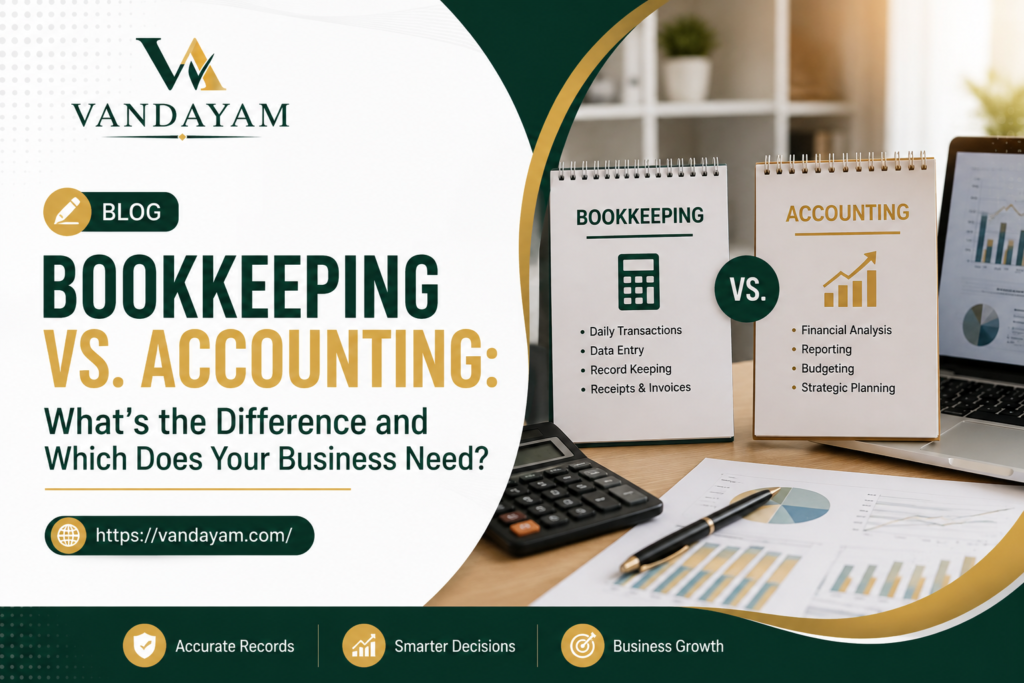

Bookkeeping vs. Accounting: What’s the Difference and Which Does Your Business Need?
August 31, 2026
How Professional Bookkeeping Helps Small Businesses Save Time, Reduce Costs and Grow
August 31, 2026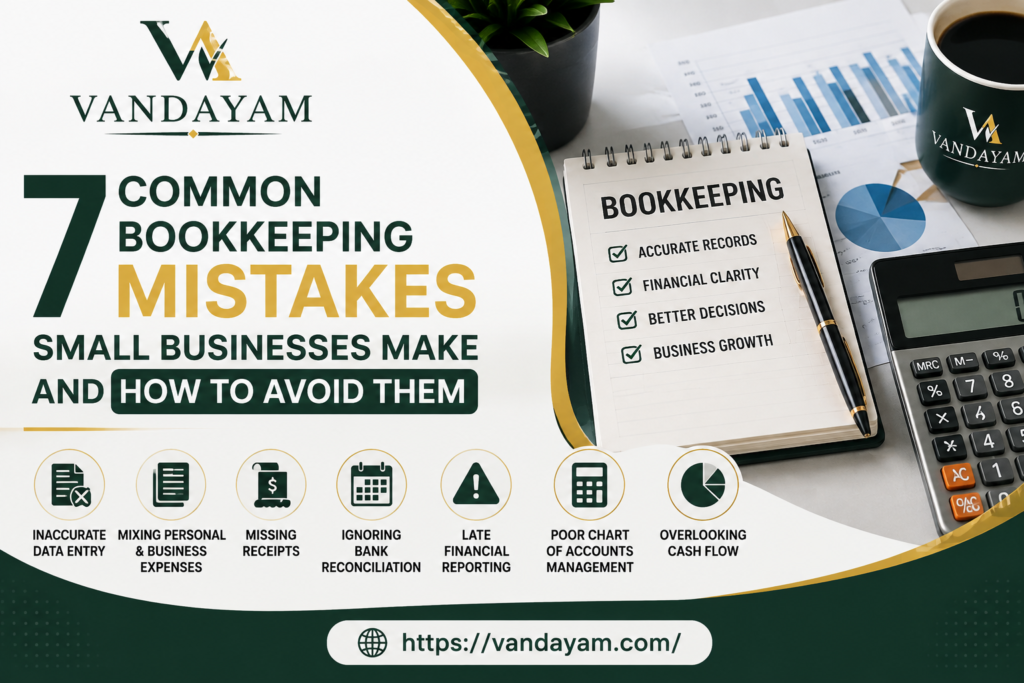
Bookkeeping may not be the most exciting part of running a business, but it has a direct impact on financial visibility and decision-making. Small mistakes can accumulate over time, making reports less reliable and creating unnecessary work later.
Here are seven common bookkeeping mistakes small businesses should watch for.
1. Mixing Personal and Business Expenses
Using the same account or card for personal and business purchases can make transactions difficult to categorize and review. It also creates unnecessary administrative work.
How to avoid it: Keep dedicated business banking and payment accounts whenever possible, and establish a consistent process for recording legitimate business expenses.
2. Falling Behind on Bookkeeping
Waiting months before updating your books makes it harder to remember transactions, locate receipts, identify discrepancies, and understand current cash flow.
How to avoid it: Establish a regular bookkeeping schedule. Monthly maintenance is far easier than trying to reconstruct an entire year at once.
3. Failing to Reconcile Accounts
A bookkeeping system can contain incorrect entries even when every transaction appears to be recorded. Bank reconciliation helps compare your records with actual account activity and identify differences.
How to avoid it: Reconcile business bank and credit-card accounts regularly and investigate unusual differences promptly.
4. Losing Track of Receivables
Sales recorded on paper do not automatically become cash in the bank. Unpaid invoices can create cash-flow pressure, especially for small businesses.
How to avoid it: Track outstanding invoices, establish clear payment terms, and follow up consistently on overdue balances.
5. Categorizing Expenses Incorrectly
Incorrect expense categories can make financial reports misleading. Over time, this can make it harder to understand which areas of the business are actually consuming cash.
How to avoid it: Use consistent categories and review unusual or ambiguous transactions instead of guessing.
6. Ignoring Small Transactions
Small purchases may seem insignificant individually, but dozens or hundreds of small transactions can add up. Leaving them unrecorded can distort your view of expenses and cash flow.
How to avoid it: Capture receipts and transaction records consistently, regardless of the amount.
7. Treating Bookkeeping as a Once-a-Year Task
Bookkeeping is most useful when it supports the business throughout the year. If records are only reviewed around tax time, you lose much of their value as a management tool.
How to avoid it: Review financial reports regularly and use them to monitor revenue, expenses, profitability, and cash flow.
Why Clean Books Matter for Growth
Clean books are more than an administrative requirement. They give business owners information they can use. Accurate records can help you identify unnecessary spending, monitor trends, prepare for tax-related work, evaluate profitability, and make more informed growth decisions.
How Vandayam Can Help
Vandayam provides bookkeeping support designed to make financial recordkeeping more organized and manageable. Instead of spending valuable business hours sorting transactions and chasing paperwork, you can have a more consistent process for maintaining your books.
Final Thoughts
The good news is that most bookkeeping problems are preventable. Separate business and personal finances, keep records current, reconcile accounts, track receivables, and review your financial information regularly.
If bookkeeping has become a recurring headache, getting professional support can help you establish a cleaner and more dependable system.
Frequently Asked Questions
What is the biggest bookkeeping mistake small businesses make?
One of the most common problems is allowing bookkeeping to fall behind. Delayed records make errors and missing information harder to identify and reduce the usefulness of financial reports.
How can I keep business expenses organized?
Use dedicated business accounts, retain receipts, categorize transactions consistently, and reconcile accounts regularly.
Should bookkeeping be done every month?
Monthly bookkeeping is a practical approach for many small businesses because it keeps financial information current without requiring daily administrative work.