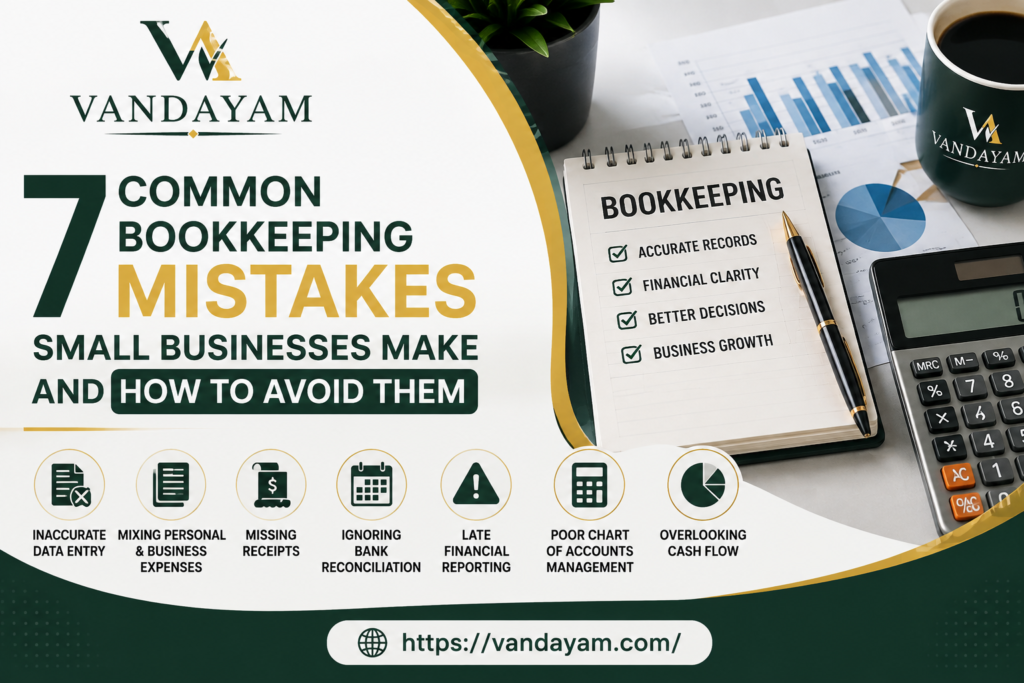

7 Common Bookkeeping Mistakes Small Businesses Make and How to Avoid Them
August 31, 2026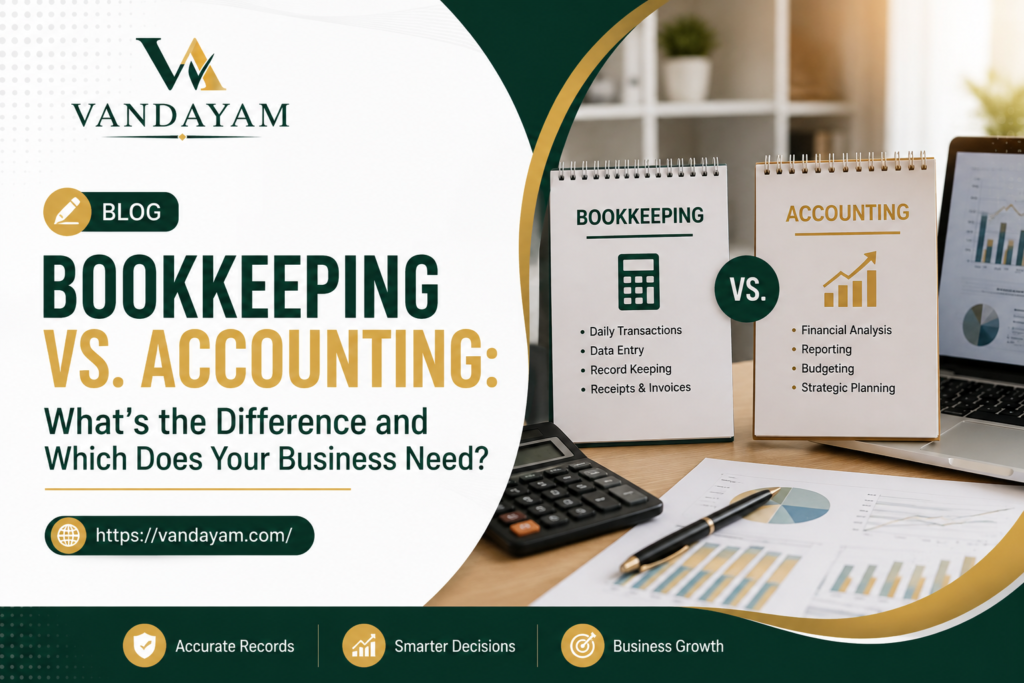
For many small business owners, bookkeeping and accounting sound like the same thing. They are closely connected, but they serve different purposes. Understanding the difference can help you choose the right financial support and make sure your business records are accurate, current, and useful.
What Is Bookkeeping?
Bookkeeping is the process of recording and organizing the financial transactions of a business. It includes tracking sales, expenses, invoices, payments, receipts, bank activity, and other day-to-day financial information.
Good bookkeeping creates a reliable financial record. When transactions are categorized correctly and reconciled regularly, business owners can see where money is coming from, where it is going, and what needs attention.
What Is Accounting?
Accounting goes a step further by interpreting financial information and using it to support planning, reporting, compliance, and decision-making. Accounting can include financial statement preparation, tax-related work, budgeting, forecasting, analysis, and strategic financial guidance.
Bookkeeping vs. Accounting: The Key Difference
The simplest way to think about it is this: bookkeeping records the financial story, while accounting helps you understand and use that story. Bookkeeping focuses heavily on accurate transaction records. Accounting uses those records to produce meaningful financial information and support business decisions.
Why Accurate Bookkeeping Matters
- Better visibility: Up-to-date books give you a clearer view of revenue, expenses, receivables, and cash flow.
- Fewer surprises: Regular reconciliation can help identify discrepancies before they become larger problems.
- Better decisions: Reliable records make it easier to evaluate pricing, spending, hiring, and growth opportunities.
- Smoother tax preparation: Organized records can make tax-related reporting and document gathering more efficient.
When Does a Small Business Need Professional Bookkeeping?
Professional bookkeeping can be valuable when financial administration starts taking time away from running the business. It can also help when transaction volume increases, multiple accounts need to be reconciled, invoices are becoming difficult to track, or you need dependable monthly financial reports.
Even a growing business with relatively simple finances can benefit from consistent bookkeeping because small errors can become harder to correct as the business grows.
What Can a Bookkeeping Service Handle?
Depending on your business and service package, bookkeeping support may include transaction categorization, bank and credit-card reconciliation, accounts receivable and payable tracking, invoice organization, monthly reporting, and maintaining clean financial records.
How Vandayam Can Help
Vandayam helps businesses take the day-to-day burden out of bookkeeping so owners can spend more time focusing on customers, operations, and growth. With organized records and consistent financial processes, you can build a stronger foundation for informed business decisions.
Final Thoughts
Bookkeeping and accounting are not competing services. They work together. Accurate bookkeeping provides the foundation, while accounting turns financial information into insights that can guide the business.
If your books are behind, difficult to understand, or taking too much of your time, professional bookkeeping support can give you greater clarity and confidence.
Frequently Asked Questions
Is bookkeeping the same as accounting?
No. Bookkeeping primarily involves recording and organizing financial transactions, while accounting focuses on interpreting financial information, reporting, planning, and analysis.
Can a small business use bookkeeping without accounting?
Some businesses may only need basic bookkeeping support for their current needs, while others benefit from additional accounting and advisory services as they grow. The right approach depends on your business structure, complexity, and goals.
How often should bookkeeping be done?
For most active businesses, bookkeeping should be maintained regularly rather than left until the end of the year. Monthly bookkeeping is a practical baseline for many small businesses.